We often notice a room only when something about it gets in the way. A crowded route, an uncomfortable reach or a lamp in the wrong place can make a familiar space quietly frustrating. This is the story of changing one corner by paying attention to how it was already being used.
The work took an afternoon. Understanding what needed to change took a little longer. These four notes follow the process from first observation to the small adjustments that made the arrangement feel natural.
01
Notice the habits
The first useful drawing of a room is often a map of how people move through it. Forget the furniture for a moment and trace the journeys instead: the route from the door to the sofa, the few steps between a chair and a bookshelf, the place where a bag lands at the end of the day.
In our living room, everyone crossed the same corner to reach the window. We had treated that corner as somewhere to store spare furniture, which meant the everyday route involved turning sideways around a stool. The problem was small enough to ignore and frequent enough to make the whole room feel less comfortable.
For a few days, we wrote down what happened without trying to improve it. The notes were simple: too dark to read here after dinner; nowhere to put a cup; chair facing the television when the conversation is happening elsewhere. Those observations gave us a much clearer brief than a folder of beautiful rooms.
02
Make a small plan
A plan does not need to be accurate enough for a builder. A quick sketch can show the door, the window and the pieces you know you want to keep. Draw the walking route before you draw any new furniture. That one decision prevents the route from becoming whatever space happens to be left over.
We tried two arrangements on paper. One gave the chair a better view but blocked the bookcase. The other left a little less room for the table and made everything easier to reach. We chose the second, then tested it with the furniture itself. A drawing can suggest an answer, but sitting down will tell you whether it works.
- Give doors and drawers enough room to open without moving something first.
- Check the route with someone already sitting in the chair.
- Keep a useful surface within reach, even if it is smaller than the one you originally imagined.
If the arrangement feels awkward, change one relationship at a time. Move the table before swapping the chair. Turn the lamp before finding another place for it. You learn much more from a small adjustment when you can tell exactly what made the difference.
03
Work with what is here
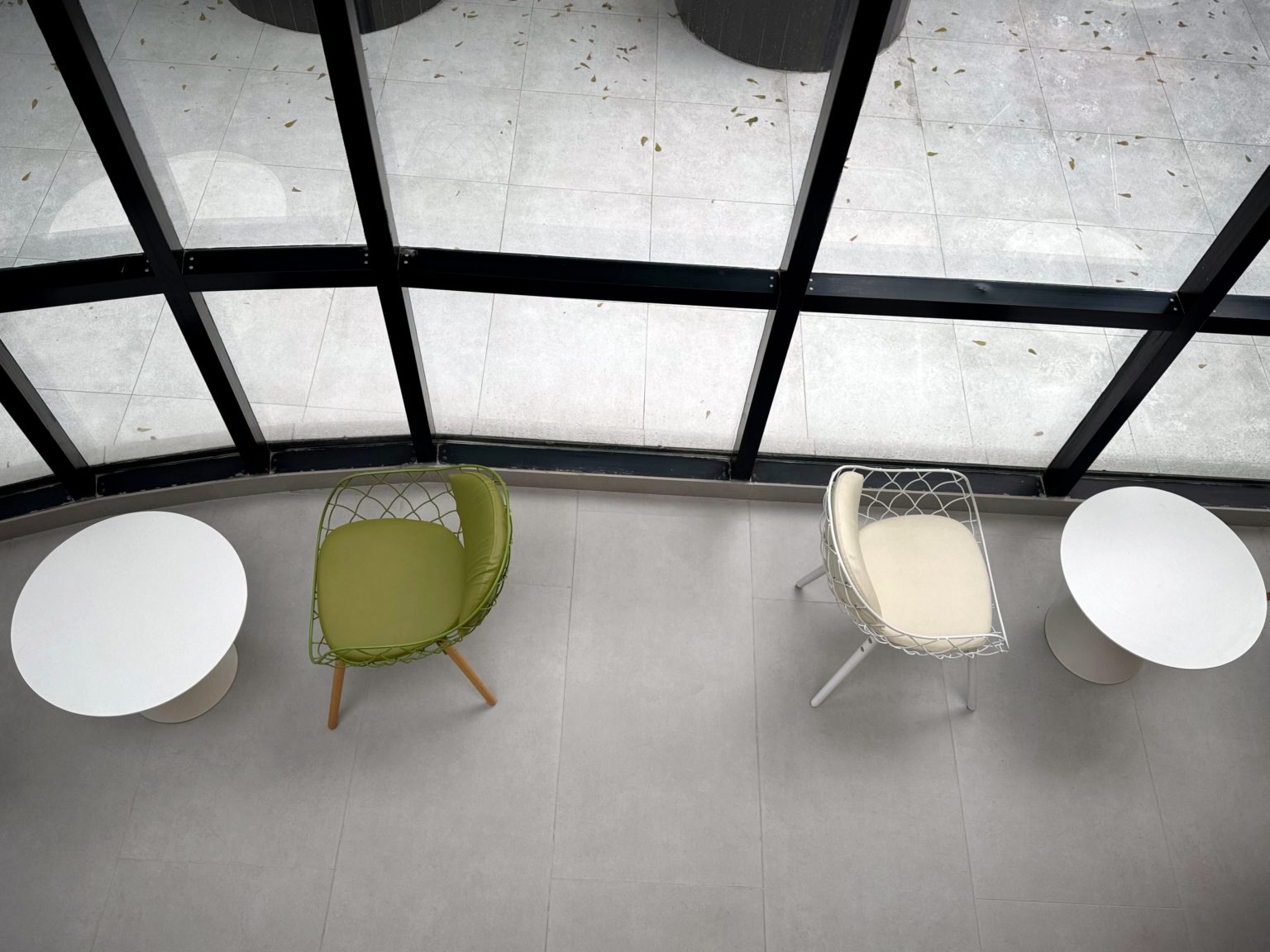
The furniture you already own is a useful constraint. It turns an open-ended shopping exercise into a practical question about proportion, position and use. The chair may not be your imagined perfect chair, but moving it towards the light can reveal qualities you had stopped noticing.
We kept a table that had previously stood beside the sofa. In the new corner it was large enough for a book and a drink, with space underneath that made the arrangement feel lighter. A taller replacement would have looked more substantial and been less comfortable to use. The modest piece was doing the better job.
The photograph captures the part that is easy to overlook: the empty floor around the furniture. That space lets each object be useful without the corner feeling crowded. You do not need to give every gap a job. Sometimes the gap is what makes the rest of the arrangement work.
04
Keep a record of use
Once the room is back together, leave it alone for a few ordinary days. Notice what you reach for, what you move out of the way and whether you choose to spend time there. A room can look convincing on Saturday afternoon and reveal its awkward parts when everyone is tired on Tuesday evening.
We kept a short list rather than making every change immediately. The lamp needed to move. The basket could stay somewhere else. The table was useful exactly as it was. Waiting helped separate a real problem from the unfamiliar feeling of seeing the room arranged differently.
Leave enough room for the next ordinary day.
From the room notebook
The result was not a finished room so much as a better starting point. There was somewhere to read, a clear route to the window and fewer objects waiting for a purpose. Begin with the part of your home that almost works. A careful look and one deliberate change may be all it needs.