You do not need to redesign an entire room to make it more useful. A single corner can become somewhere to read, think or talk if you give it a clear purpose and enough space to support that purpose. This guide follows the process from the first observation to the adjustments you make after living with the result.
Work through the chapters in order if you are starting with an empty space. If you already have an arrangement that almost works, use the contents to jump to the part you want to improve. Keep a notebook nearby and treat each suggestion as something to test in your own home.
In this guide
Choose a purpose before a layout
A room can support more than one activity, but a small corner usually works better when you give it a clear first job. Think about the moment you want to make easier. You might want somewhere to read after dinner, a place to write a few notes in the morning or a comfortable seat for a conversation away from a screen.
Describe that moment in ordinary language. “Somewhere to read for half an hour” tells you more than “a relaxing corner”. It suggests a chair you can sit in comfortably, light that reaches a page and a surface for the things you want beside you. The description becomes a simple way to judge each decision that follows.
Write a short brief
- Name the activity you want to make easier and when it usually happens.
- List the two or three things you need within reach while doing it.
- Notice what currently interrupts the activity: a poor light, a blocked route or an uncomfortable position.
Keep the brief somewhere you can see it while you work. When an extra object starts to look appealing, ask whether it helps the activity you chose. It can still belong in the room, but it may not belong in this particular corner.
Read the room as it is
Before moving anything, spend a little time in the space at the hour you expect to use it. Light, noise and the route through a room all change during the day. The corner that feels calm on a quiet morning may sit directly beside the busiest path when everyone gets home.
Look for evidence of what already works. A book left on the windowsill, a chair regularly turned away from the television or a lamp that someone keeps moving is useful information. People often adapt a room to their needs long before they describe what is wrong with the arrangement.
Take one photograph from the doorway and another from the place where you would sit. The first shows how the corner relates to the room; the second shows what using it might feel like. Keep both images as references. They help you compare the eventual change without relying on your memory of the original clutter.
Test the layout with what you own
Move the largest piece into position first, then test the route around it. Sit down, stand up and reach for the table. Open the nearby cupboard. Walk past while someone else is sitting there. These small checks reveal more than arranging every object carefully and looking at the result from a distance.
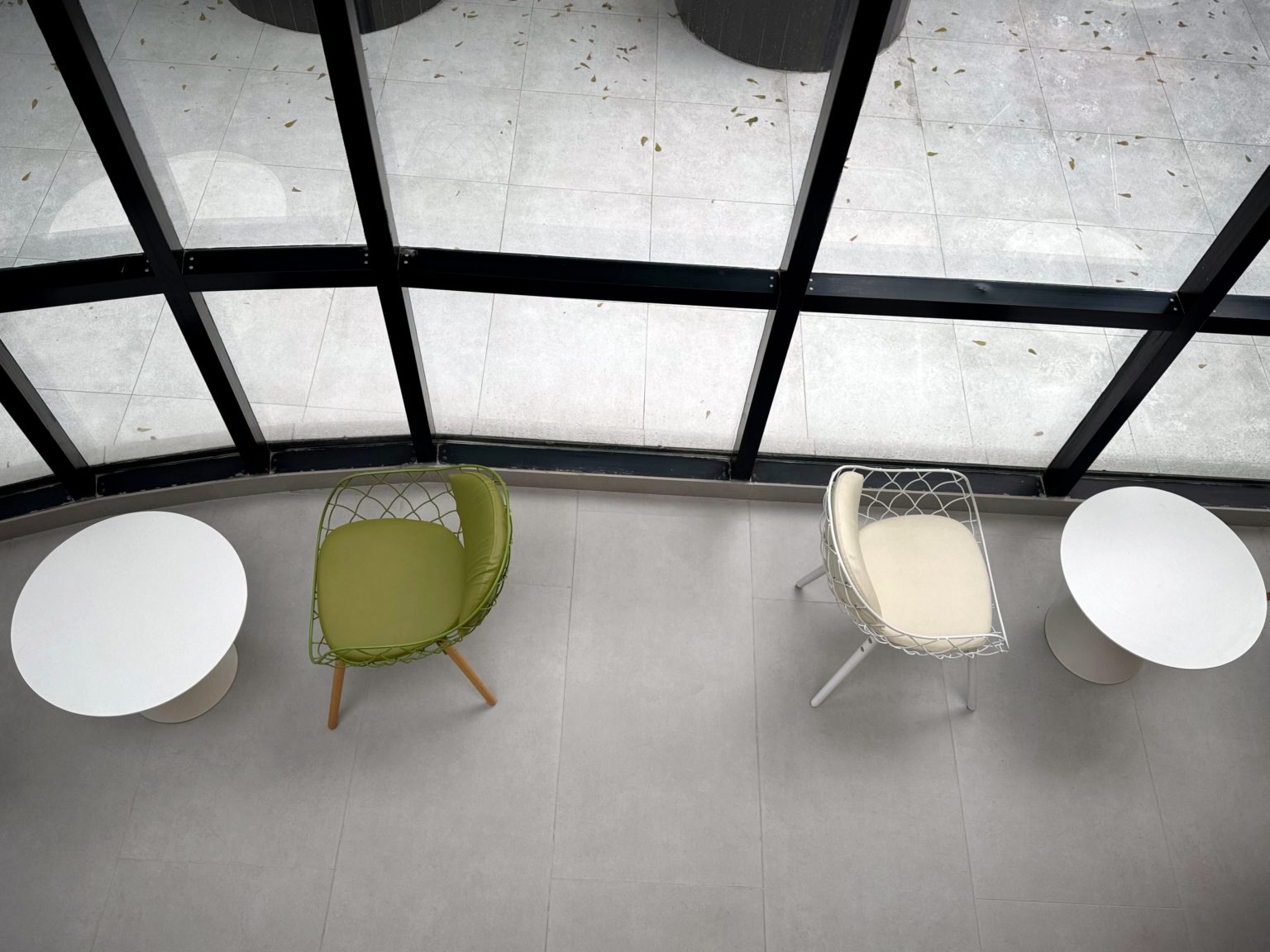
The example shows how a little space around a chair and table can make a corner feel settled without adding more furniture. The relationship matters more than the particular pieces: a comfortable seat, a useful surface and a route that remains easy to follow.
If the corner feels crowded
Remove the smallest extra piece before giving up on the arrangement. A spare stool or basket can occupy exactly the space your feet or a passing person needs. Then turn the chair slightly and test again. Small changes in angle can open a route without changing which parts of the room face one another.
Add the things that earn their place
Bring back the practical details one at a time. Begin with the light and whatever you regularly reach for. A table that can hold a book and a cup has already done useful work; it does not need a permanent collection of objects to justify being there.
Try a plant only after the main arrangement works. It should suit the light available and leave room for the activity you planned. A plant is a living object with its own needs, so a convenient gap is not automatically a good home for it. Choose its position by looking at the whole room rather than filling the first empty surface.
An empty surface is room for the day to happen.
From the room notebook
Leave one part of the arrangement open. The spare space might hold a newspaper tomorrow or nothing at all. Giving the corner that flexibility helps it remain useful when the contents of an ordinary day change.
Make the second round of changes
Use the corner for a week before making a final judgement. Notice what you move automatically, what you keep fetching from elsewhere and what never gets used. If you can, write these observations down as they happen. The small irritation you forget by morning may be the easiest thing to improve.
Make one adjustment at a time and give it another evening. Move the lamp, swap the table or turn the chair. Keeping the changes small lets you connect the improvement to a specific decision. It also makes it easier to undo something that looked sensible but did not work in practice.
The aim is a place that supports your life without demanding attention every time you use it. You may never reach a moment when the corner is finished, and that is fine. A useful room can keep changing while its purpose stays clear.
One change to make today
Choose a corner you pass every day and write one sentence about what you would like to do there. Remove one object that does not support that activity, then sit in the space for a few minutes. Begin with what you notice, not with what you think a finished room ought to contain.