Care guide from the Brook Street workshop
An oiled wood finish is the easiest one to look after, because you never strip it: you feed it. Once or twice a year, a thin fresh coat brings back the colour, closes up the dry patches and keeps water from marking the grain.
This is the same routine we follow in the workshop before a piece goes back to its owner. Allow an afternoon, most of which is waiting, and do it on a dry day with a window open.
Before you start
Clear the piece, and work somewhere you can leave it undisturbed overnight.
- A hard-wax or finishing oil matched to the one already on the wood.
- Two lint-free cotton cloths and a pair of gloves.
- A fine grey abrasive pad for any rough or marked patches.
- A metal tin with a lid for the used cloths.
1. Clean it properly
Wipe the whole surface with warm water and a drop of washing-up liquid, then dry it straight away. Oil will seal in whatever it goes on top of, so crumbs, fingermarks and old polish all need to come off first.
2. Deal with the marks
Rub any water rings or rough patches gently with the grey pad, always along the grain. You are only taking off the dry top layer, not sanding back to bare wood. Wipe the dust away with a barely damp cloth.
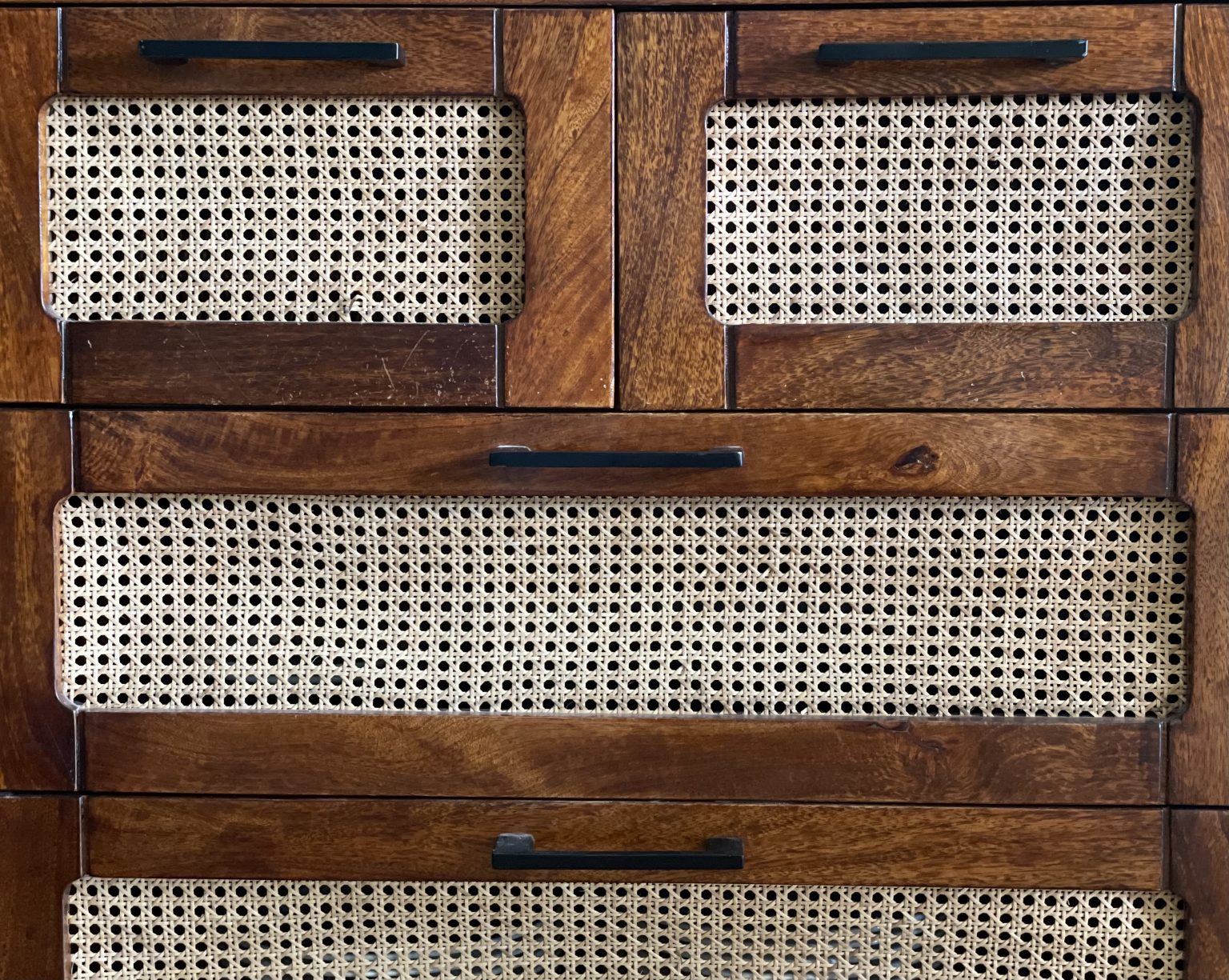
3. Apply one thin coat
Put a teaspoon of oil on the cloth, not on the wood, and work it in along the grain one section at a time. The surface should look evenly damp rather than wet. Less is better: a heavy coat stays tacky for days.
The mistake we see most
Leaving the excess to soak in. After fifteen minutes, buff the whole surface with the clean cloth until it feels dry to the touch. Anything left standing will dry as a sticky, uneven film.
4. Let it cure
Leave the piece overnight before you use it, and a full week before you stand a vase or a hot mug on it. Lay the oily cloths flat to dry outside, then put them in the lidded tin: rags soaked in oil can heat up on their own.
Before you put things back
- The surface feels dry and smooth, with no tacky patches.
- The colour is even from end to end, with no glossy streaks.
- The cloths are drying flat outside, away from the house.
If the finish has worn through to grey, bare wood, or a ring will not shift, it needs more than a fresh coat. We can collect it, or come to you in Leeds and the surrounding villages.