The coast, from above
One view, in six looks.
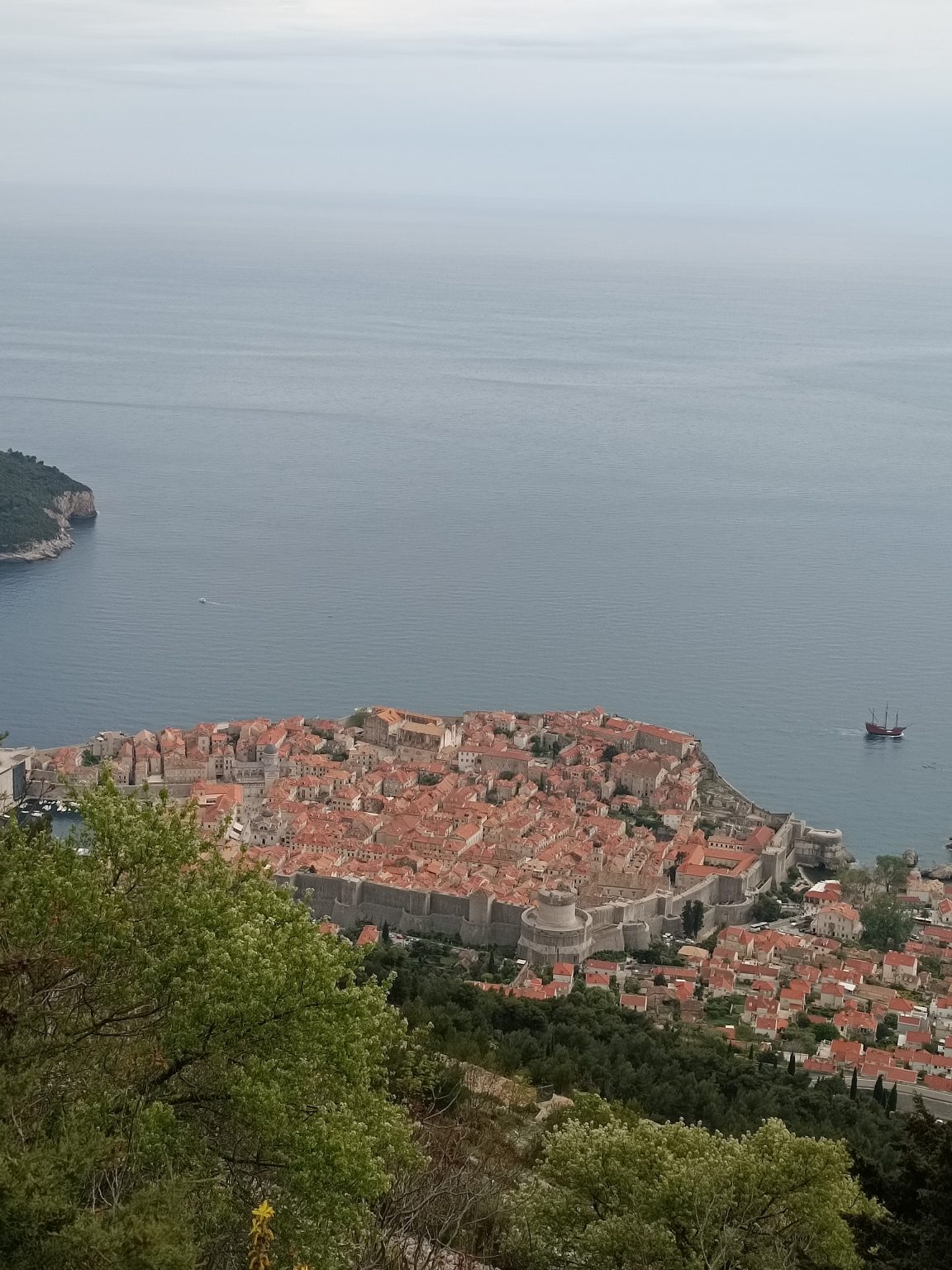
Rooflines, stone walls, trees and open water share one photograph. Read down and the frame moves through the scene: each chapter pauses on a detail, and the last one returns to the whole view.
One
The open water
The sea fills the upper part of the photograph. Its surface is a field of soft blue and grey, crossed by small ripples and a faint wake. Above the tightly packed roofs, that open space gives the eye somewhere to pause.
The camera begins here before moving towards the town. The quiet surface makes the warmer colours below feel brighter, and the distance between the foreground leaves and the water gives this single picture its depth.
Two
Across the blue
Further across the water, the surface stays almost uninterrupted. The town sits below it, a dense edge of warm roofs against cool blue. A small sailing boat to the right gives the open water a useful sense of scale.
No second photograph is needed to change the rhythm. Moving the frame across the same scene lets a quieter part of the view take the lead, while the buildings remain part of the larger picture.
Three
The green foreground
The nearest part of the view is full of leaves, branches and rough ground. These irregular shapes soften the rows of roofs beyond them. Their darker greens make the pale stone and terracotta stand out without needing another point of view.
Look through the gaps in the foliage and the town comes back into focus. The foreground is part of the composition: it gives the photograph a near edge and makes the water feel further away.
Four
Where town meets sea
The rooflines gather into a compact shape at the edge of the water. Small changes in height and colour give the buildings their rhythm, while the broad stone walls draw a clearer boundary around the town.
This is where the photograph moves from texture to outline. The roofs read as many individual pieces; the wall joins them into one place, held between the sea above and the greenery below.
Five
Beyond the walls
At the right-hand edge, pale stone meets the blue water. The curve of the shoreline and the small boat beyond it carry the eye away from the crowded roofs and back towards the open surface of the sea.
The frame is still looking at the same photograph. Its changing position simply gives more attention to the space around the town, so the final return to the full scene feels familiar.
Six
The whole view
The frame pulls back and the parts settle together again: open water, warm rooflines, pale stone walls and the green foreground. Each detail belongs to the same photograph, seen first as a whole and then read more slowly.
Explore the coast
Use the full view to choose where your eye goes next, from the close foreground to the town and the water beyond.