




Loam and marigold, Crescendo steps
ProCrescendo steps
Authored font stack with theme and device fallbacks
Show a process in order with WordPress how-it-works patterns: numbered steps as a list, cards or a stair, built for the Gutenberg editor.
22 patterns shown
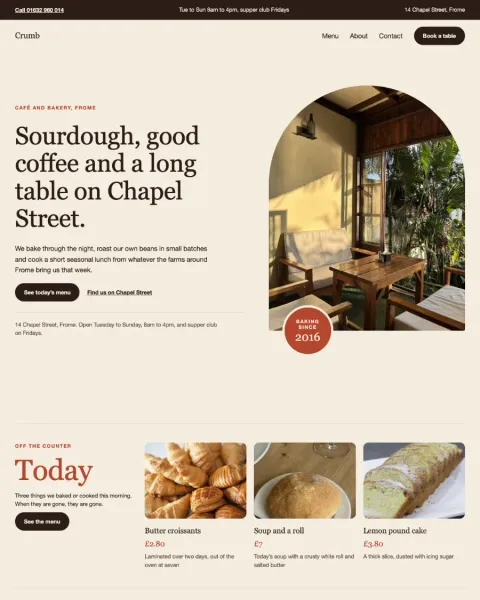
Mend Physiotherapy clinic
See Mend as whole pagesSpur Electrician and plumber
See Spur as whole pagesBough Tree surgeon
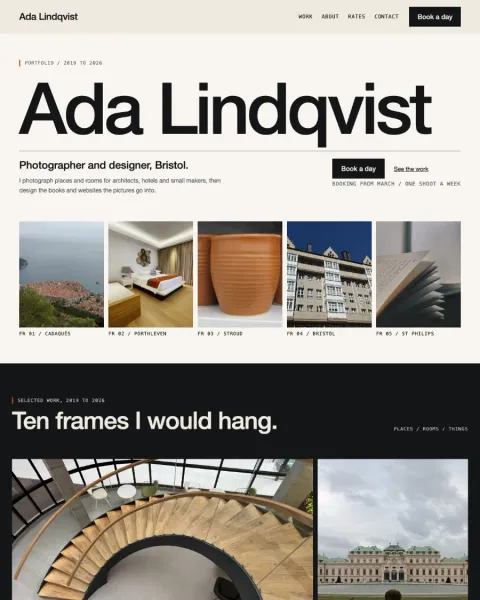
See Bough as whole pagesFolio Freelance photographer and designer
See Folio as whole pagesTape Podcast
See Tape as whole pagesCounsel Law firm
See Counsel as whole pagesCrescendo steps
Authored font stack with theme and device fallbacks
Folded steps, one open
Authored font stack with theme and device fallbacks
Fork in the steps
Authored font stack with theme and device fallbacks
Notched-numeral steps
Authored font stack with theme and device fallbacks
Recipe card steps
Authored font stack with theme and device fallbacks
Share-of-time bar
Authored font stack with theme and device fallbacks
Sliced photo steps
Authored font stack with theme and device fallbacks
Tick-box checklist steps
Authored font stack with theme and device fallbacks
Two-lane booking steps
Authored font stack with theme and device fallbacks
Your part, our part
Authored font stack with theme and device fallbacks
Process delivery manifest
Authored font stack with theme and device fallbacks
Process switchback
Authored font stack with theme and device fallbacks
TPO permission steps
Authored font stack with theme and device fallbacks
Appointment letter checklist
Authored font stack with theme and device fallbacks
First visit to scale
Authored font stack with theme and device fallbacks
Steps cover stair
Authored font stack with theme and device fallbacks
Try a shorter search or choose another category.
Showing 1–22 of 22 · Featured first
Looking for sections that move? 58 interactive patterns on their own page
Any theme
The same section in each theme below, word for word. The pattern brings the layout; the colours and fonts are the theme’s, so it matches the rest of your site.
22 patterns
| Pattern | What it is | Notable blocks | Variations | Access |
|---|---|---|---|---|
| Appointment letter checklist | What to bring to a first appointment, set as the confirmation letter itself. | Group | 2 | Subscription |
| Course plan taper | A typical course of treatment drawn as eight weeks on a ruled baseline. | Group | 2 | Subscription |
| Crescendo steps | Four ruled garden-design steps whose titles grow at every line, from body size to a final step set at display size under a heavy rule, with its note and two buttons under it. | Columns, Group | 2 | Subscription |
| First visit to scale | What happens at a first appointment, drawn to scale. | Group | 2 | Subscription |
| Folded steps, one open | Five stages in one column, four folded to a single ruled line of numeral, name, timing and a plus mark, and the third opened out as a filled panel with a display numeral, its timing, a paragraph and a list of what the client brings. | List | 2 | Subscription |
| Fork in the steps | A four-step new-patient process whose second step is a question. | Columns, Group | 2 | Subscription |
| Notched-numeral steps | Three filled blocks in a row, each with its numeral set in a square of the page ground cut into its top-left corner, the timing beside the notch and a title and one sentence below. | Columns, Group | 2 | Subscription |
| Process delivery manifest | A three-phase handoff unfolds through nested document frames. | Group | 2 | Subscription |
| Process switchback | Four numbered joinery steps follow alternating ruled landings, turning from one edge to the other while keeping a clear reading order. | Group | 2 | Subscription |
| Recipe card steps | A visit written as a recipe card inside a 2px border. | List | 2 | Subscription |
| Share-of-time bar | Four numbered steps of a twenty-day kitchen fit drawn as one ruled bar, each segment as wide as the days its step takes, with a day scale under it and a key of what happens in each. | Columns, Group | 2 | Subscription |
| Sliced photo steps | Three numbered stages of a course of physio, each captioned beside one horizontal slice of the same studio photograph, so the picture reassembles down the page with a numbered plate on each slice. | Cover | 2 | Subscription |
| Steps cards | Four photographic process cards with level tops and descending feet. | Image | 5 | Free |
| Steps cover stair | A full-bleed cover with a heavy veil of your theme's contrast colour over the photograph, a display headline at the top left and three numbered steps set as a stair. | Cover | 3 | Subscription |
| Steps ledger | A process set as a printed schedule. | Columns, Group | 4 | Subscription |
| Steps one take | How a thing gets made in five ruled rows on a dark band. | Group | 2 | Subscription |
| Steps run | A process as one horizontal run. | Separator | 4 | Free |
| Steps screens | A software walkthrough in four columns. | Image | 2 | Subscription |
| Tick-box checklist steps | A before-your-appointment checklist. | Columns, Group | 2 | Subscription |
| TPO permission steps | A four-step process on an inverted slab for work that needs the council's consent. | Group | 2 | Subscription |
| Two-lane booking steps | Five numbered steps after a booking, each set in the lane of whoever does it. | Columns, Group | 2 | Subscription |
| Your part, our part | A five-step boiler swap split in two. | Group | 2 | Subscription |
Guide
A how-it-works section takes away the fear of the unknown. A visitor who can see what happens first, what happens next and when it ends is far more likely to make the first move. Name each step for what the customer does or gets, not for your internal process.
Choose the layout from what each step needs. Short steps read well in a single row of numbers; steps that need a picture want cards; a process with timings or paperwork reads better as a schedule or a checklist, where the reader can see the whole journey at once.
Number the steps so a reader knows where they are. Use cards when each step has an image and a list when the copy carries it.
New to patterns? Learn how to copy and paste a pattern. Read how we test patterns.
FAQ
Open a pattern, choose a variation and press Copy pattern. In the block editor, click into an empty paragraph and press Cmd+V on Mac or Ctrl+V on Windows: the section arrives as ordinary blocks you edit like any other.
Three to five. If your process has more, group the small actions into stages so the reader sees a short path, and put the detail on a page of its own.
Yes. Each step is its own group of blocks: duplicate one in the List View to add a step, or delete one to remove it, then renumber the steps that follow.
No. All 22 are built from core WordPress blocks, so they paste into the block editor with nothing to install.
Yes. Every pattern's first variation names no colour or font of its own: it takes your theme's palette, type and spacing when pasted. 25 Styled looks bring their own colours, and each is labelled Styled.
Yes, 2, marked Free in the At a glance table on this page. They copy without an account and are among 64 free Core Patterns; a subscription opens the rest.
Subscribe
Yearly plans
Every pattern, template and theme download, and new patterns as we release them.
Checking your account.
Yearly plans
Every pattern and styled look, every theme (whole pages, a theme download, or a whole website started in one click) and the Pro plugin, on unlimited websites. The interactive patterns are on Everything.
Billed once a year
What you copy is yours forever. Not for you? We refund within 14 days.
Unlimited covers your own sites and the sites you build for clients; an account may not be pooled or resold between unrelated businesses. Everything you copy is yours to keep, forever, on any site; access to the rest of the library runs while you subscribe. Not for you? Tell us within 14 days of a payment and we refund you. After that, cancelling stops the next renewal and access runs to the end of the year you have paid for. Prices are in pounds and are the full price in the UK, the US and eleven other countries; elsewhere the checkout adds your local VAT or sales tax. The terms name every country. If the renewal price changes, we will email you at least 30 days before it applies.
Already subscribed?
Pro, £49 a year
Sign in to continue
Your subscription lives on your account. Sign in, or create one here, and you go straight on to payment.
Not got an account?
A password is at least 8 characters. Trouble signing in? [email protected]
You are subscribed
Every page arrives as a draft, with the header, footer, menu and pictures. Nothing is published until you say.
Your plan, on unlimited websites. Your card, invoices, plan changes and cancellation are in Stripe's billing portal.
The Interactive Patterns come with Everything. Manage billing moves you up, and you pay only the difference.
Payment is handled by Stripe; we never see your card.